
Distribution is changing
For most of the last twenty years, software distribution has followed a familiar path. Products were discovered through search engines, app stores, paid ads, and direct traffic. Growth meant ranking higher, spending more, or building stronger brands.
That model still exists, but a new distribution surface is now just as real: AI.
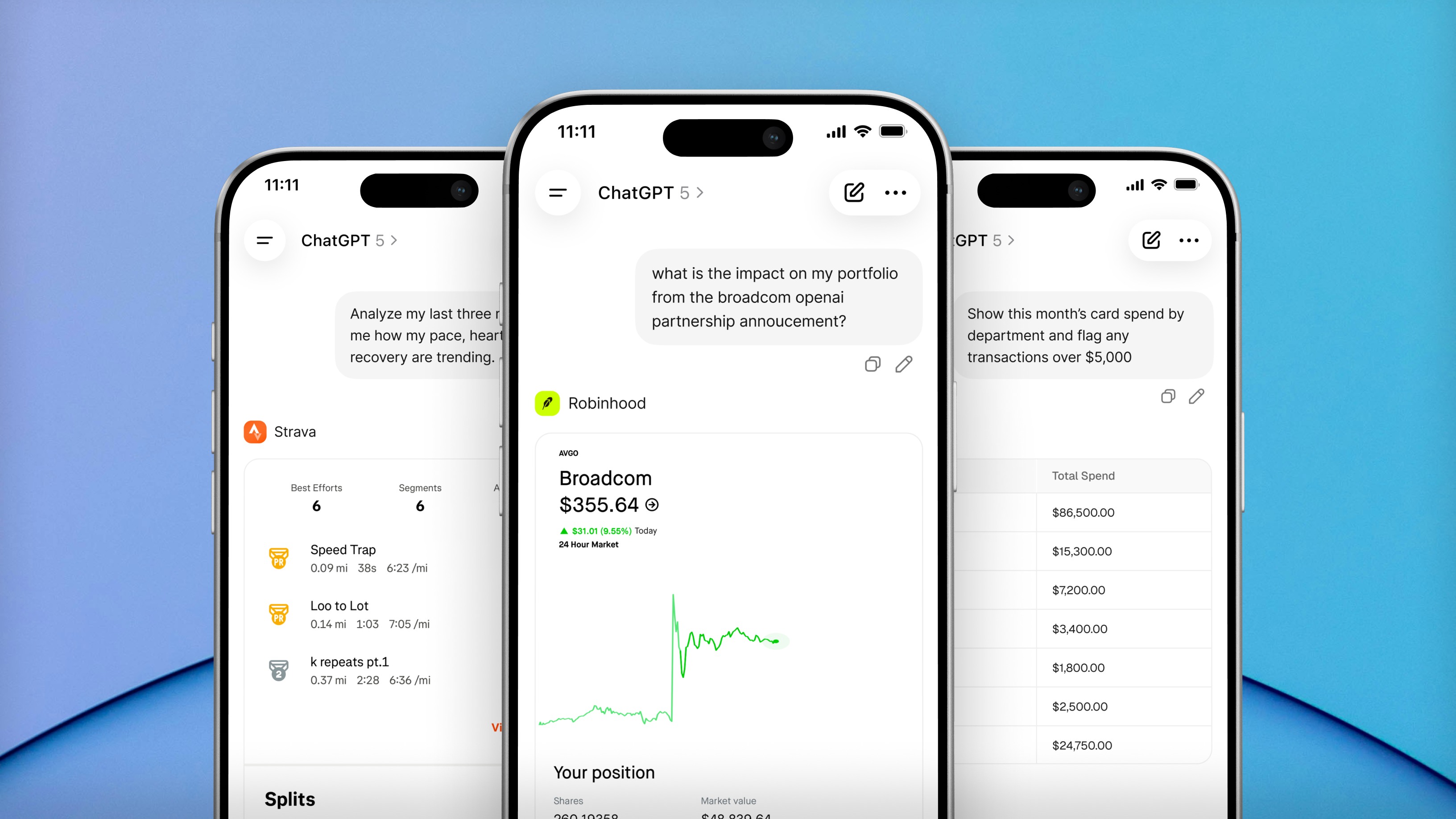
ChatGPT now reaches roughly 800 million people every week. People are not just searching for links anymore. They ask AI to help them write, plan, compare, buy, and decide. When that happens, the AI does not return a list of options. It often chooses a tool, a workflow, or a product on the user’s behalf.
This changes the economics of growth. Customer acquisition costs have risen more than 60% over the past five years. At the same time, more users arrive with clear intent and expect software to meet them there, instantly. The lowest-cost user is no longer the one who clicks an ad. It is the one who asks an AI for help and is routed directly to a product that can act.
If an AI cannot find or use your product at that moment, your product is not part of the workflow. And increasingly, you do not lose users to competitors. You lose them to whatever the AI decides is the fastest way forward.
The Interface Shift
This change in distribution reflects a deeper shift in the internet’s interface. For decades, software lived behind screens, menus, and fixed navigation. Users learned where things were and how to move through them.
Now users express intent in natural language. They describe what they want, and systems assemble the right steps and tools around that request. The interface is no longer a set of buttons. It is a conversation that turns into action.
This does not mean traditional apps disappear. History suggests otherwise. Mobile did not eliminate desktop. It became the primary entry point for many everyday tasks. AI is now becoming a similar front door. A growing share of interactions with software will begin not inside an app, but inside an AI system.
Over time, products that integrate cleanly into this new interface will be easier to reach. Products that do not will feel increasingly distant, even if they remain technically available.
AI-Native Apps
Most products today were not built for AI. They assume users will open them intentionally, move through screens, and follow predefined paths. That model breaks down when usage becomes dynamic and driven by intent in real time.
To work inside AI systems, products need a different shape. They must be callable, so an AI can trigger what they do. They must be composable, so their capabilities can combine with other tools and data. And they must be context-aware, so they adapt to what the user needs in the moment.
An AI-native app is a product designed to be used directly through AI, at the moment where intent becomes action. For most teams, that shift is difficult to implement with today’s architectures. This is the problem we set out to solve.
Layo turns existing products into AI-native experiences with real UI, real actions, and real data. We provide the first platform for enterprise product teams to create, measure, and grow their ChatGPT app. This allows apps to be discovered and used directly inside AI platforms, not as links, but as living parts of the workflow.
The next phase of distribution is not about where users go. It is about where their intent is resolved. If you want your product to lead in that shift, reach us at team@uselayo.com.